Article · Wikipedia archive · Last revised Jul 12, 2026

Hasapi

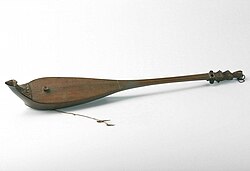
Hasapi, also written as kacapi, hapitan, and kulcapi, is a two-stringed lute played by the Batak people of the Indonesian island of Sumatra. The plucked instrument was used for Zere religious rituals and is now used as part of the orchestra accompanying the traveling theater Opera Batak.

Last revised
Jul 12, 2026
Read time
≈ 1 min
Length
93 w
Citations
1
Source
Hasapi
A one-stringged hasapi
String instrument
Classification Stringed instrument
Hornbostel–Sachs classification321.321
Renowned hasapi player Si Data of "Soerbakti, Karolanden," North Sumatra (1915-1920) by Tassilo Adam source ↗

Hasapi (Toba Batak: ᯂᯘᯇᯪ), also written as kacapi (Pakpak: ᯂᯘᯇᯪ), hapitan (Toba Batak: ᯂᯇᯪᯖᯉ᯲), and kulcapi (Karo: ᯂᯬᯞ᯳ᯠᯇᯫ), is a two-stringed lute played by the Batak people of the Indonesian island of Sumatra.1 The plucked instrument was used for Zere religious rituals and is now used as part of the orchestra accompanying the traveling theater Opera Batak.

References

References

  1. Achim Sibeth; Bruce W. Carpenter (2007). Batak sculpture. D. Millet. p. 212.